
Film Cell Man
Nightmare Folklore: Why the Terror Seems to Come From Outside
A weight on the chest, a presence in the room, a body that refuses to move. Sleep science can explain much about the experiences behind nightmare folklore. Explaining why those experiences become particular monsters requires a different kind of attention.

A weight on the chest, a presence in the room, a body that refuses to move. Sleep science can explain much about the experiences behind nightmare folklore. Explaining why those experiences become particular monsters requires a different kind of attention.
Henry Fuseli gave the nightmare a body. In his 1781 painting The Nightmare, a small creature crouches on a reclining woman's torso while a horse's head emerges from the darkness behind her. Her slack posture and the creature's alert gaze divide the scene between someone who cannot act and something that apparently can. An inward experience has acquired an occupant. [1]
The painting is often used to illustrate sleep paralysis, provided no one mistakes an artwork for a clinical record. Fuseli supplied no electrodes, sleep diary or patient interview. He supplied an arrangement of vulnerability and power whose central proposition needs little explanation: something has entered the room, and the person in the bed cannot make it leave.
Nightmare folklore repeatedly gives distress an agent. A pressure becomes an assailant, an inability to move becomes restraint, a vague sense of company becomes a visitor. Modern sleep research offers plausible mechanisms for some of these experiences. It does not establish that every nocturnal spirit in every tradition is the same neurological event in different local clothes.
That distinction is where the interest lies. Similar bodies can produce recognizable experiences across great distances, while different communities turn those experiences into different kinds of knowledge. A story about a spirit may also be a conversation about danger, sexuality, responsibility or whose testimony deserves belief. Explaining the sleeper does not explain everything people later do with the story.
Before the nightmare was a dream
The word itself preserves a displaced culprit. The mare in nightmare belongs to an older family of words for a troubling nocturnal being, including Old Norse mara and German Mahr, and is distinct from the word for a female horse. English usage moved from the attacking being toward the oppressive experience and eventually the broader sense of a frightening dream. [2]
Etymology can illuminate this change without becoming a diagnosis. An old word might collect experiences a modern clinician would separate, while a modern label might group experiences earlier speakers understood differently. Translating every historical nightmare as “sleep paralysis” makes the archive tidier by discarding part of what it contains.
A nightmare and sleep paralysis are not the same thing. A nightmare is a distressing dream; nightmare disorder involves recurrent experiences with significant distress or impairment. Sleep paralysis involves an inability to make voluntary movements at sleep onset or awakening, sometimes with intensely vivid perceptions. The two can overlap in a person's account of a terrible night without becoming interchangeable. [3]
The distinction changes what needs explaining. A person who wakes from a dream of being chased recognizes a transition from the dream world to the bedroom. Someone experiencing paralysis may feel that the bedroom itself contains the threat. The familiar setting lends the event an apparent evidentiary advantage: this seems to be happening here, where ordinary waking life takes place.
Older demonologies added other questions. In Book XV of The City of God, Augustine discusses reports of sexual assaults attributed to beings called incubi, weighing testimony within a theological argument about spirits and bodies. The passage records an influential way of reasoning about such reports. It does not give the detail needed to diagnose the people whose experiences reached him through testimony and rumor. [4]
Thomas Aquinas later treated related problems in the Summa Theologiae, asking what functions spirits could perform through assumed bodies. His discussion of a demon taking female and male forms belongs to the intellectual history behind succubus and incubus traditions. The question concerns embodiment and generation within a theological system, not the classification of REM sleep. [5]
These authors tried to reconcile inherited authorities, reported experience and a theory of how the world worked. Their conclusions are not scientific evidence because the arguments were elaborate, but treating them as mere monster descriptions misses the institutions that made some explanations credible and others hard to express.
There is also an ethical limit to retrospective explanation. An account of nocturnal assault cannot responsibly be dismissed as sleep paralysis just because the proposed attacker sounds impossible. The record may be incomplete, metaphorical, shaped by interrogation or entangled with actual violence. A modern mechanism is a hypothesis about some reports, not permission to disbelieve every person whose account fails a contemporary vocabulary test.
Medicine did not arrive all at once
The history is often staged as a contest between a long supernatural darkness and a recent scientific light. A tenth-century Persian medical text complicates that picture. A 2012 historical study examines descriptions in Akhawayni's Hidayat that the authors identify with sleep paralysis, placing bodily explanations many centuries before modern sleep physiology. [6]
That text does not make its medicine equivalent to present knowledge. It shows that bodily explanations existed within older intellectual worlds, so people did not have to choose between a laboratory that did not yet exist and an unexamined belief in demons. Historical inquiry is more accurate when mistaken physiological theories still count as physiological theories.
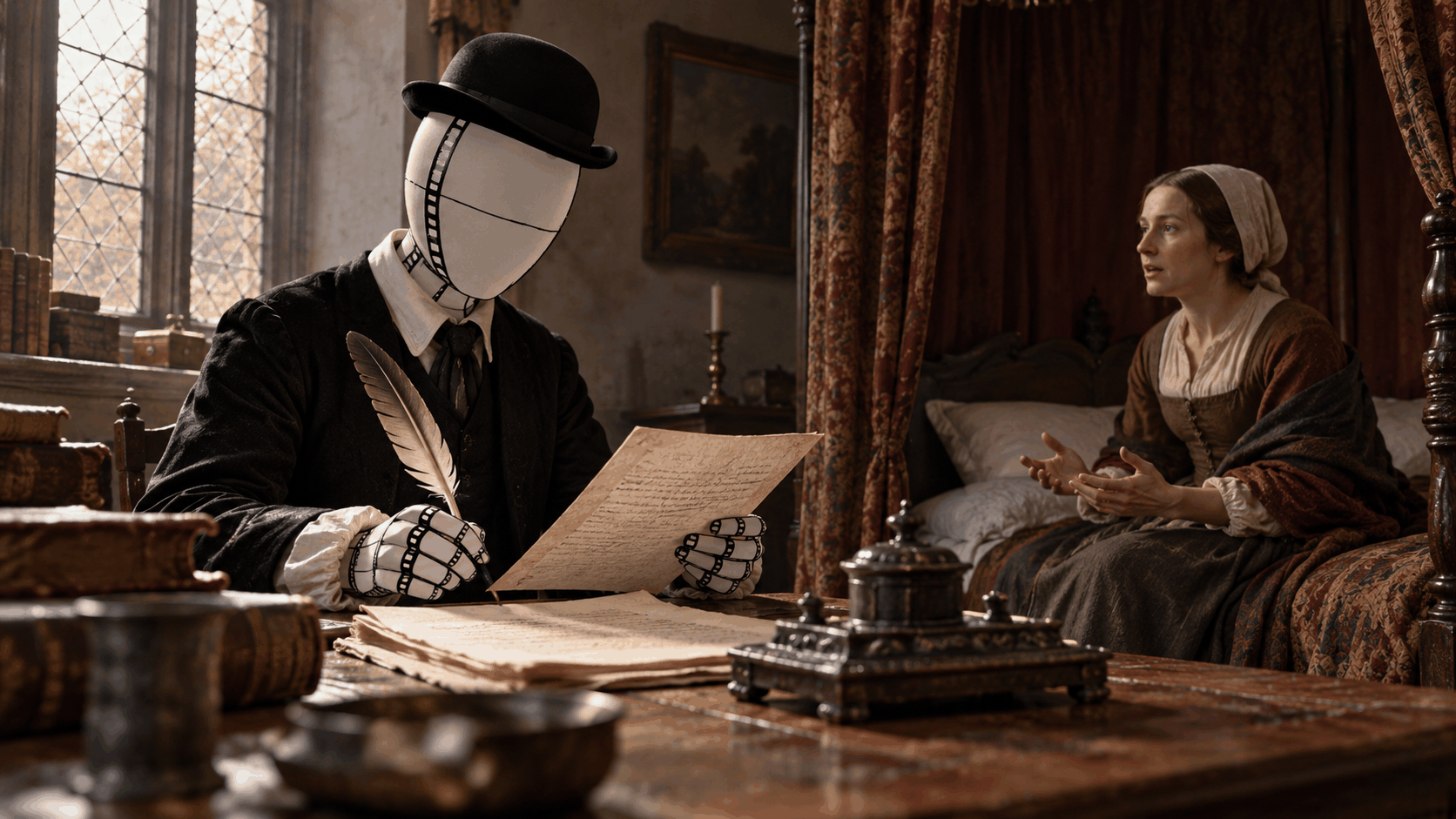
A much later European case shows the coexistence clearly. In 1664, the Dutch physician Isbrand van Diemerbroeck described a fifty-year-old woman whose oppressive night experiences included an apparent attacker and difficulty moving. Erwin Kompanje's modern analysis reads the account as sleep paralysis with associated hallucinations. It is a detailed early clinical description, not a defensible claim to the first such experience recorded anywhere. [7]
The patient's report and the physician's explanation occupy different positions. She reports what the episode felt like; he proposes what produced it. A historian needs both, without assuming that the physician's vocabulary exhausts the experience or that the patient's interpretation establishes an external cause.
Modern physiology supplies what these records could not: measurements of sleep and of the processes that normally limit movement during REM sleep. Reviews describe paralysis as a dissociation of features normally associated with sleep and waking. Motor inhibition persists while awareness and dreamlike perceptions can overlap, creating a state that resists the everyday division between asleep and awake. [8]
That account is more useful than announcing the whole event was imaginary. The inability to move can be real, the fear can be real and the perception of a presence can be compelling, while the inferred intruder is absent. Calling an experience a hallucination describes its relation to an external stimulus. It does not mean the person invented it or could have ended it by being more sensible.
Removing the demon does not remove the event. A satisfactory account must still explain why a person experienced immobility, company, pressure or fear with enough force to remember it long afterward.
The Old Hag is not a passport stamp
In Newfoundland, the Old Hag tradition gave researchers a revealing meeting point between experience and interpretation. R. C. Ness's 1978 paper drew on thirteen months of fieldwork in a northeastern coastal community. It described paralysis and hallucinations understood as an Old Hag attack, and examined local ideas about cause and response. [9]
The study also resists the dismissal of experiencers as unusually disordered. Among sixty-nine adults assessed through an illness questionnaire, Ness found no significant difference in reported psychological or physical complaints between those who had experienced the phenomenon and those who had not. A small community study cannot settle every clinical association, but it undermines the assumption that an extraordinary account identifies an extraordinary kind of person.
David Hufford's The Terror That Comes in the Night, originally published in 1982, made the experiential basis of such beliefs a central problem for folklore research. The reversal is methodological: a person may interpret an unsettling experience through a tradition, but the tradition need not have manufactured every element of the experience in advance. Belief can follow an encounter as well as precede it. [10]
Neither direction is sufficient alone. A shared story can give someone language for an isolating event, while the event can make the story newly persuasive. The useful question concerns that exchange between what happened and how the person decided what it meant.
Japanese research offers another instructive case. A 1987 study of kanashibari surveyed 635 college students and found that roughly forty percent reported at least one episode of isolated sleep paralysis. This was a student sample, not a census of Japanese belief. The term names a recognizable experience; it does not mean every speaker is identifying the same demon. [11]
Such results are easily exported carelessly. A writer looking for “sleep demons around the world” can turn a survey of students into a statement about a nation, then turn an experience into a creature. The resulting atlas looks informative because each country has been assigned a memorable monster.
Brazil's Pisadeira offers a different example. A scholarly review describes a figure associated with nocturnal oppression, represented as a frightening woman who attacks sleepers. The tradition can be compared with paralysis accounts for recurring features, but a review of folklore does not establish that every Brazilian knows it, that every version agrees or that its earliest surviving form has been identified. [12]
Comparison is stronger when it keeps those limits. Chest pressure, immobility and an apparent assailant may form a useful cluster across reports. A name, a moral explanation, a particular remedy or an account of who is vulnerable may travel through a different history. Resemblance in one cluster does not establish common ancestry for the whole tradition.
There are at least three historical possibilities. Similar experiences might lead separate communities to develop similar explanations; a story might travel between communities; or an imported story might attach to an experience already recognized locally. These can coexist, but choosing among them requires evidence of transmission and chronology. A row of similar illustrations establishes resemblance, not the route by which it developed.
The earliest surviving written account is also not necessarily the beginning of a tradition. It is the point at which one version entered a record that happened to survive, shaped by the collector's question, language and selection. Treating the recording date as a birthday erases the oral history that came before an outsider decided to preserve it.
The case of Popobawa makes these limits harder to ignore. Katrina Daly Thompson's Popobawa: Tanzanian Talk, Global Misreadings examines a figure discussed in coastal Tanzania, including stories of sexual attack. The book's subject is also talk itself: how people handle troubling claims, identities and meanings in conversation. Reducing that material to a medical nickname discards the social activity the researcher set out to understand. [13]
Thompson's accompanying teaching materials identify interviews conducted in Dar es Salaam and Zanzibar Town in July and August 2009. They explicitly include the relationship between religious commitments, belief and skepticism. Even this basic description complicates the stereotype of a whole place believing one thing until an outside observer supplies the first doubt. [14]
A conversation about a nocturnal being is not necessarily a report of having encountered it. Someone may be testing a rumor, challenging another speaker, invoking a warning or negotiating what can be said about sex. Before assigning a mechanism, a researcher has to establish what kind of statement is being made.
What the laboratory can actually see
Sleep paralysis is common enough to make the recurring-experience hypothesis plausible. A 2011 systematic review combined thirty-five studies involving 36,533 people and reported lifetime estimates of 7.6 percent in general-population samples, 28.3 percent among students and 31.9 percent among psychiatric patients. These are different sampling categories, not competing measurements of one population. [15]
The figures should stay attached to their date and methods. Lifetime recall depends on what respondents recognize, what they remember and how questions describe the experience. A startling episode without the expected terminology may be missed, while a broad question may capture experiences the investigator meant to exclude.
Research on the felt presence offers a more specific clue to the intruder. In a 1999 study of 870 students, J. Allan Cheyne and colleagues examined relationships among perceptions associated with sleep paralysis. Fear was particularly connected with sensing a presence. The findings support investigating how threat and apparently social perception become linked; they do not prove a single causal sequence for every episode. [16]
The distinction between a presence and a visible figure matters. A person need not first see a detailed monster and then become frightened. A compelling sense of company can invite an explanation of who is there, which provides a route from an ambiguous bodily event to an external agent without the sleeper deliberately assembling a fictional creature.
Even the shorthand “awake mind, sleeping body” is less exact than it sounds. In 2021, Giulia Mainieri and colleagues analyzed recordings from five participants that included five paralysis episodes and two false awakenings. Their EEG findings showed features intermediate between familiar categories, with substantial REM-like activity. The study offered physiological evidence about mixed states, but its sample was small. [17]
A false awakening adds another complication: someone dreams that waking has already occurred, so the apparent correction of a dream can be part of the dream. The episode does not need a spectacular creature to be disturbing. Familiar surroundings become unreliable precisely because they seem to certify a return to ordinary reality.
An exploratory study published in 2025 shows both progress and scarcity. Researchers recorded ten unusual sleep episodes across lucid dreaming, paralysis, out-of-body experiences and false awakenings; only two were paralysis episodes. Their analysis found features distinguishing these experiences from ordinary wakefulness while sharing aspects of sleep stages. Ten recordings are not a complete map of consciousness. [18]
An unresolved mechanism does not establish a supernatural alternative. It calls for proportional language: the evidence supports a physiological account of sleep paralysis, while the fine structure of particular experiences remains under investigation.
Monster catalogues tend to omit one corrective. In a study published online in 2020, Monika Kliková and colleagues surveyed 172 people with recurrent paralysis; twenty-three percent reported pleasant episodes. Positive experiences could contain fear as well, and were associated particularly with sensations of bodily movement. The selected sample supplies no population rate, but it shows that terror is not inevitable. [19]
An account that collects only attacks will unsurprisingly discover an attacking phenomenon. Experiences that are curious, mixed or enjoyable may need a more flexible account of the same underlying processes, and the absence of a monster belongs in the evidence too.
Recent work on anxiety demands similar restraint. A September 2026 meta-analysis found higher anxiety scores associated with sleep paralysis, but a separate analysis of anxiety prevalence was sensitive to excluding an outlying study. The researchers synthesized eleven studies, not a universal causal law. Anxiety might shape episodes, episodes might intensify anxiety, and other factors may contribute to both. [20]
The broader lesson concerns levels of explanation. Physiology addresses how an episode can occur; psychology investigates its perception and consequences; historical and ethnographic work examines the language and authority surrounding it. One level can constrain another without abolishing it. Knowing how speech is produced would not, by itself, explain why a particular accusation becomes believable.
The evidence needed differs accordingly. A physiological event may require a recording made during the episode. A belief may require an interview afterward, because interpretation and recollection are part of the subject. A historical tradition may require dated texts and records of circulation more than a modern participant's resemblance to a clinical description. A source can be excellent for one question and inadequate for another.
A laboratory cannot replay a seventeenth-century patient's night, and an old manuscript cannot measure REM activity. Both contribute when their claims stay within reach of their methods.
An explanation also changes who is entitled to speak about the experience. A physiological account can make an episode less mysterious without answering every question about the image the sleeper remembers. A cultural account can explain the available vocabulary without proving that a story caused the sensation. Keeping those tasks separate lets the witness remain credible about what happened to them while the cause stays open to investigation. The alternative is a forced choice between endorsing the visitor and disbelieving the person who felt visited.
A market for unwanted visitors
The external attacker remains a powerful narrative arrangement because it turns helplessness into a relationship. A malfunction offers little dramatic reciprocity; an intruder can want something, choose someone or return. This is an interpretation of storytelling structure, not a claim that people invented their experiences to improve a plot.
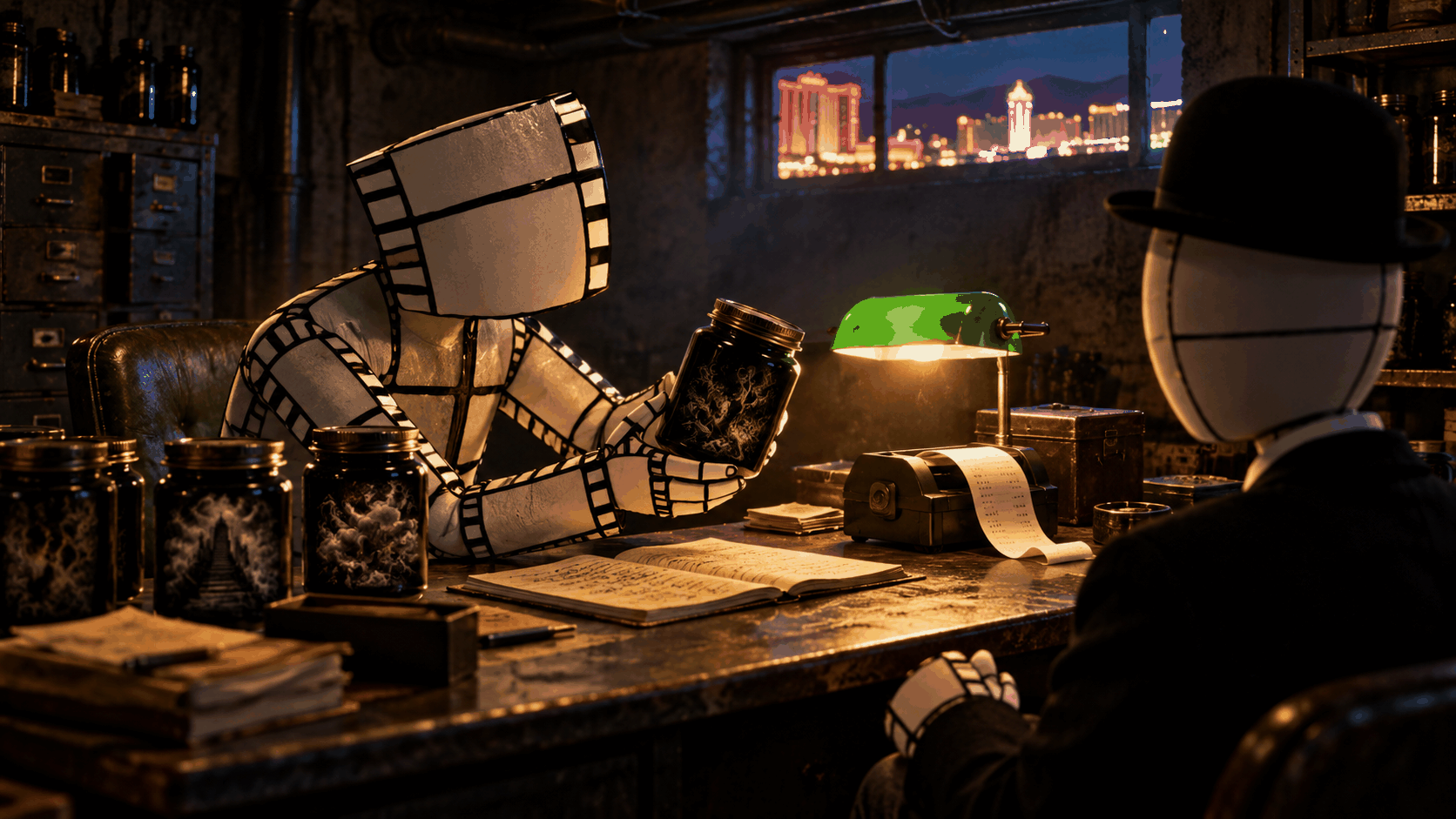
Broken English Films' They Sold Nightmares makes a different fictional move. Its published premise places rival nightmare sellers beneath Reno, Nevada, turning unwanted nocturnal experiences into things that can be traded and inflicted. The commodity is imaginary, but the inversion is legible: what usually arrives without permission becomes something another person can acquire and direct.
That premise changes the distribution of power. Traditional accounts ask what entered the bedroom or why the sleeper was vulnerable. A nightmare market also asks who ordered the experience, who profits from it and whether knowing its mechanism would make anyone safer. Explanation can become proprietary information rather than relief.
The idea works best when its borrowed vocabulary keeps some friction. A fictional guild may combine names for dramatic purposes, but an article about actual traditions should not mistake that combination for historical kinship. Fantasy is free to construct a world; research has to track where the construction begins.
There is something disquieting in the promise that a nightmare could become fully intelligible and still be someone else's instrument. The old visitor interrupts a sleeper's command of the body. The seller adds a second loss of control: another person decides what the experience is worth, who receives it and what explanation is available afterward.
Fuseli's creature looks outward while the woman cannot answer its gaze. Modern knowledge can remove that creature from the room without removing the asymmetry the painting captures. Someone has undergone an experience that others will name, interpret, dismiss or use. The question left beside the bed is partly about what happened, and partly about who gets to tell the sleeper what it means.
Broken English Content
 No Reprieve
 Castigation
 The Best Laid Plans No Reprieve Castigation
 What are the differences in memory types? A complete guide.
 Dream Sequence
 Alzheimers versus dementia. The lurking evil within the beautiful organ.
 The Devil’s Secretary and Other Infernal Affairs
 The Hammet Cult: A Chronicle of Blood and Betrayal